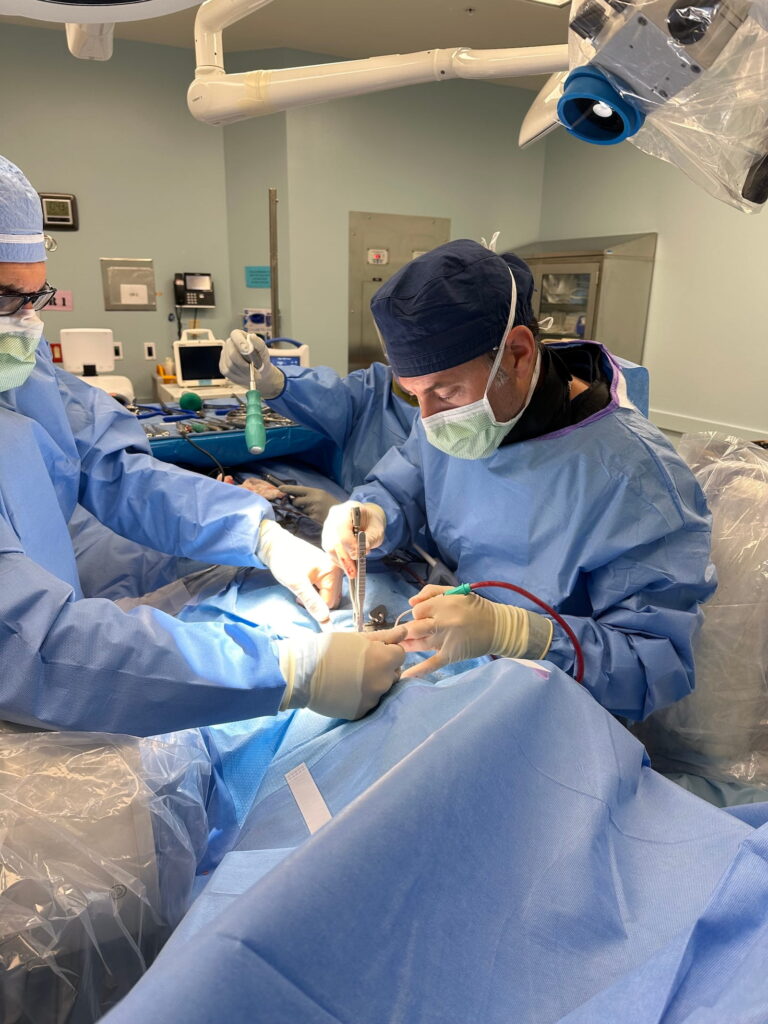
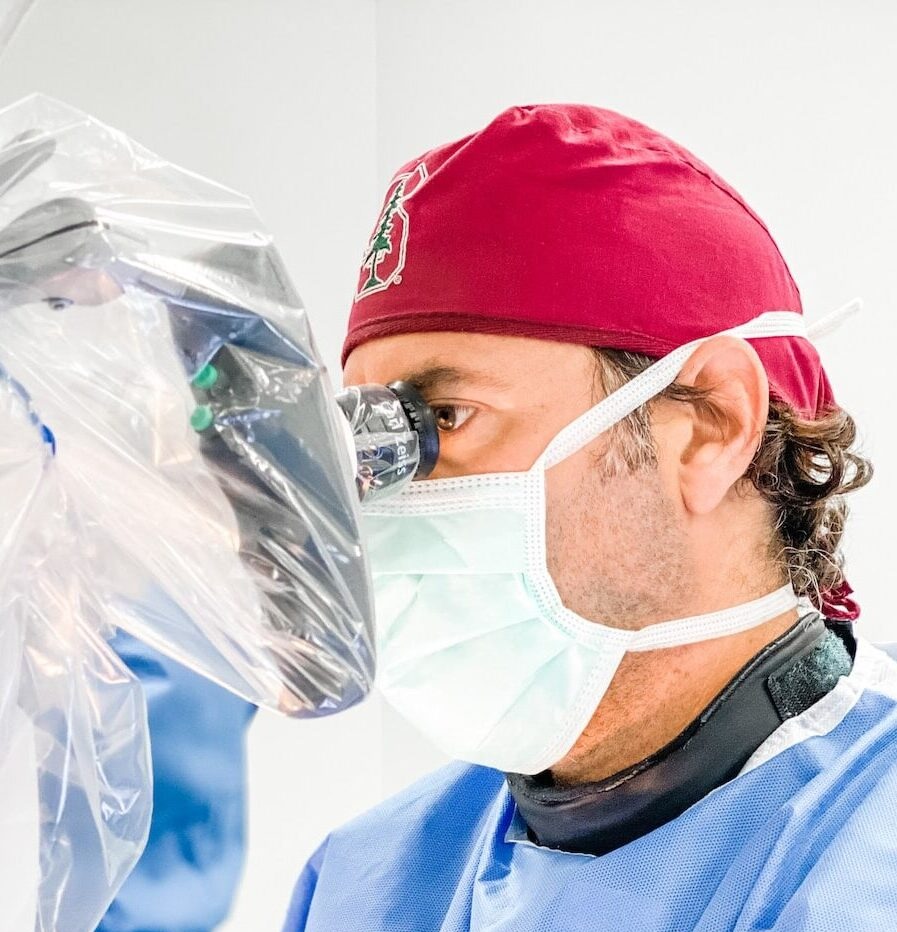
A compressed spinal nerve can cause pain, numbness, tingling, or weakness in the arms or legs. When these symptoms are caused by narrowing around a nerve root, a foraminotomy may help relieve the pressure.
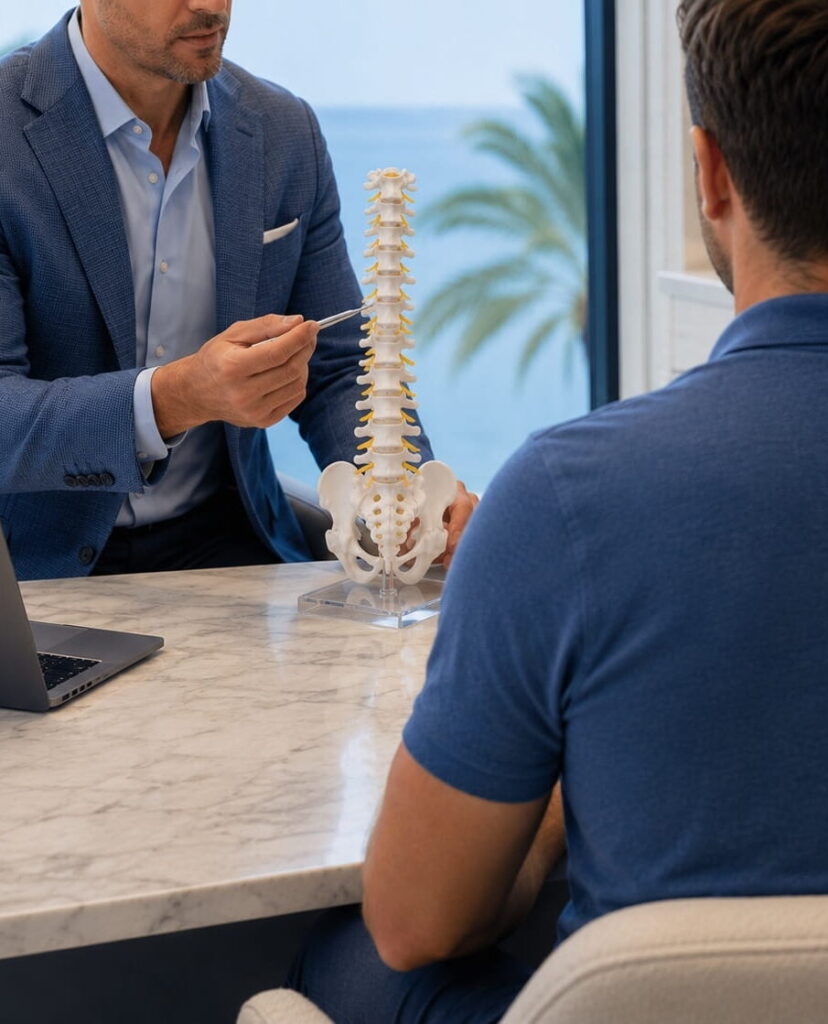
Dr. Jason M. Cuéllar performs cervical and lumbar foraminotomy procedures for appropriately selected patients in Jupiter, Florida. Before recommending surgery, he carefully reviews each patient’s symptoms, imaging, prior treatments, and long-term goals.
What Is a Foraminotomy?
Nerves leave the spinal canal through small openings between the vertebrae called neural foramina. Each opening acts as a passageway for a spinal nerve root.
When one of these passageways becomes too narrow, the surrounding bone, disc material, or soft tissue can press against the nerve. This condition is known as foraminal stenosis.
A foraminotomy enlarges the affected opening by removing a carefully selected amount of the tissue causing the compression. The objective is to give the nerve more space while preserving as much healthy spinal anatomy as possible.
Unlike procedures intended to address generalized back or neck pain, a foraminotomy is primarily used to treat symptoms that can be traced to a specific compressed nerve root.
What Conditions Can a Foraminotomy Treat?
Foraminal narrowing can develop for several reasons. Some patients experience gradual changes associated with aging, while others develop nerve compression because of a disc injury or another structural problem.
A foraminotomy may be considered for conditions such as:
Foraminal stenosis: Narrowing of the opening through which a spinal nerve exits.
Bone spurs: Additional bone growth associated with arthritis or spinal degeneration.
Facet joint arthritis: Enlargement and inflammation of the joints behind the spine can contribute to narrowing.
Cervical radiculopathy: A compressed nerve in the neck that causes symptoms in the shoulder, arm, or hand.
Lumbar radiculopathy: A compressed nerve in the lower back that produces symptoms in the buttock, leg, or foot.
The presence of one of these conditions on an MRI does not necessarily mean surgery is required. Imaging findings must match the patient’s symptoms and physical examination.
Symptoms of a Compressed Spinal Nerve
The symptoms of foraminal stenosis depend on which nerve is affected and how severely it is compressed.
Compression in the cervical spine may cause:
Neck pain that extends into the shoulder or arm
Numbness or tingling in the hand or fingers
Arm or hand weakness
Pain that worsens with certain neck positions
Difficulty with gripping or fine motor tasks
Compression in the lumbar spine may cause:
Lower back pain with pain extending into the leg
Sciatica-like burning, aching, or shooting pain
Numbness or tingling in the buttock, leg, or foot
Weakness in the leg, ankle, or foot
Symptoms that worsen while standing or walking
Radiating arm or leg symptoms are often more suggestive of nerve compression than isolated neck or back pain. However, only a thorough evaluation can determine whether narrowing in the foramen is the true source of the problem.
When Is Foraminotomy Considered?
Many patients with nerve-related symptoms improve without surgery. When appropriate, initial treatment may include activity modification, physician-guided exercise, medication, physical therapy referrals, or an epidural steroid injection.
Surgery may enter the discussion when:
Radiating arm or leg pain remains disruptive despite non-surgical treatment
Numbness, tingling, or weakness is persistent or worsening
Imaging shows nerve compression that corresponds with the symptoms
Pain interferes with sleep, work, walking, or routine activities
The patient has difficulty tolerating or benefiting from conservative care
Progressive neurological changes raise concern about continued nerve damage
The decision is not based on imaging alone. Dr. Cuéllar evaluates the full clinical picture before determining whether decompression is likely to provide meaningful improvement.
Cervical vs. Lumbar Foraminotomy
A foraminotomy can be performed in either the neck or lower back, but the symptoms and surgical details differ.
Cervical Foraminotomy
A cervical foraminotomy relieves pressure on a nerve root in the neck. It may be considered when compression causes arm pain, hand numbness, tingling, or weakness.
For properly selected patients, posterior cervical foraminotomy may preserve motion by avoiding fusion. The best approach still depends on the patient’s anatomy and diagnosis.
Lumbar Foraminotomy
A lumbar foraminotomy treats nerve compression in the lower back. It may be used when foraminal narrowing causes pain, numbness, tingling, or weakness in the buttock or leg.
The procedure targets the area where the nerve exits the spine. In some cases, disc material may also be removed to complete the decompression.
How Is a Foraminotomy Performed?
The exact surgical approach depends on the region of the spine, the affected level, and the tissue pressing on the nerve.
In general, the procedure involves:
The patient is placed under anesthesia.
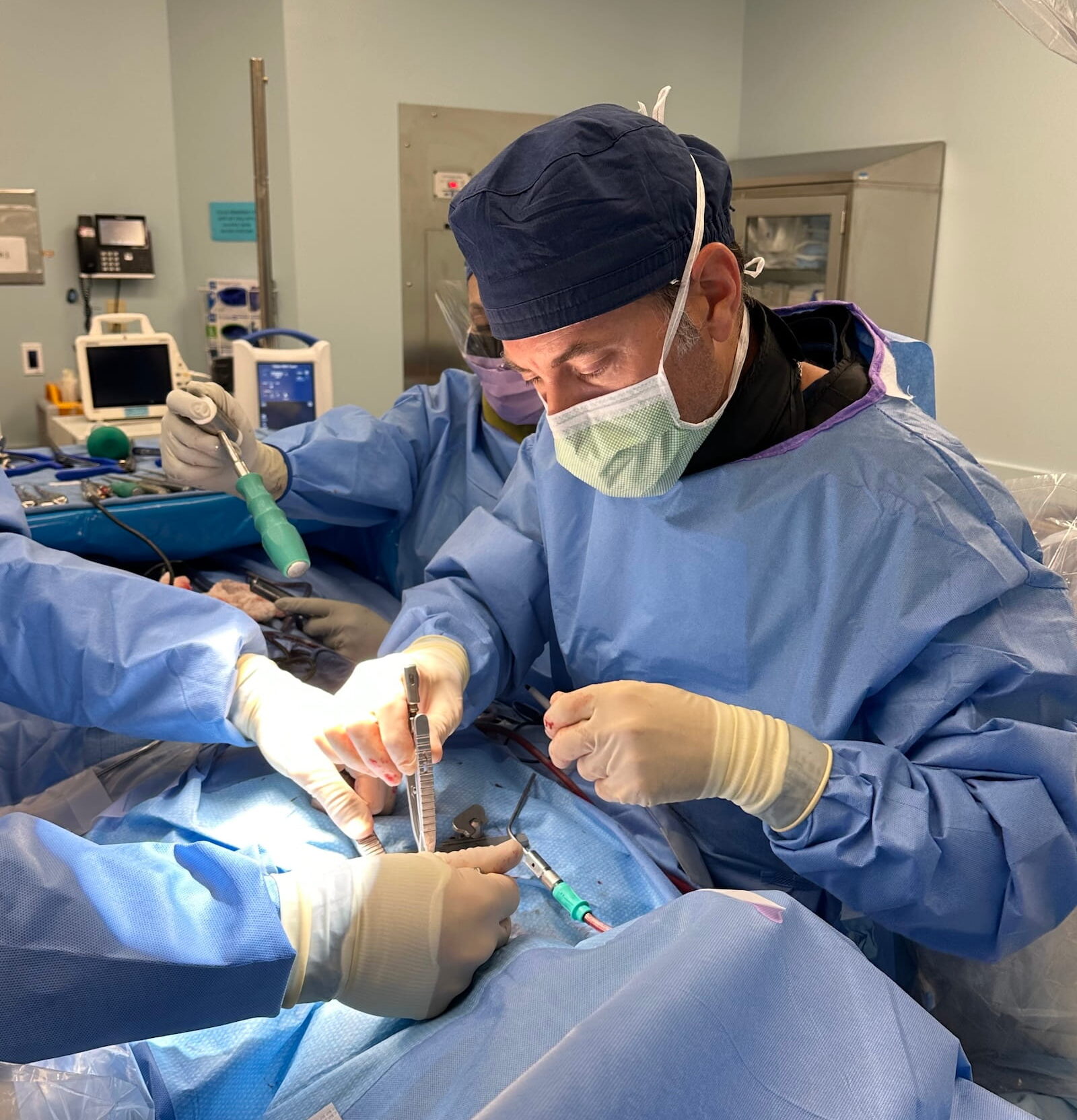
Dr. Cuéllar accesses the affected area of the spine through an incision.
Specialized instruments are used to identify the compressed nerve.
A precise amount of bone, ligament, disc material, or other tissue is removed.
The nerve is examined to confirm that adequate space has been restored.
The incision is closed and the patient begins postoperative observation.
The goal is not to remove more tissue than necessary. It is to achieve sufficient decompression while protecting the nerve and maintaining spinal stability.
Potential Benefits of Foraminotomy
When symptoms are being caused by clearly identified nerve compression, foraminotomy may offer several benefits.
Targeted Nerve Decompression: The procedure directly addresses the narrowed passageway rather than treating the entire spinal level unnecessarily.
Relief of Radiating Pain: Removing pressure from the nerve may reduce arm pain, leg pain, burning, or electric shock-like sensations.
Improvement in Nerve Function: Some patients experience improvement in numbness, tingling, or weakness as the nerve recovers. The degree of recovery can depend on how long and how severely the nerve was compressed.
Preservation of Spinal Motion: An isolated foraminotomy typically does not fuse the vertebrae. This allows motion at the treated level to be preserved when the spine is otherwise stable.
Limited Removal of Healthy Anatomy: The operation is designed to remove only the structures necessary to free the affected nerve.
Foraminotomy vs. Laminectomy
Foraminotomy and laminectomy are both decompression procedures, but they address different areas of the spine.
A foraminotomy enlarges the opening where a nerve root exits the spinal column. It is generally focused on compression affecting an individual nerve.
A laminectomy removes part or all of the lamina, the section of bone covering the back of the spinal canal. This creates more room within the central spinal canal and may be appropriate when stenosis affects a broader area.
In some cases, a foraminotomy is performed by itself. In others, it may be combined with a laminotomy, laminectomy, or discectomy. The appropriate operation depends on where the compression is located.
Does Foraminotomy Require Spinal Fusion?
Not always. If the spine is stable, a foraminotomy may be performed without fusion.
Fusion may be considered when there is:
Significant spinal instability
Vertebral slippage
Severe deformity
Extensive degeneration
A need to remove enough bone that stability could be affected
A previous operation that has changed the spinal anatomy
Dr. Cuéllar determines whether decompression alone is sufficient or additional stabilization is needed.
Recovery After Foraminotomy
Recovery depends on the location and extent of the procedure. Many patients begin walking shortly after surgery and return home the same day or after a short stay.
Temporary soreness and activity restrictions are common. Dr. Cuéllar provides personalized guidance for returning to work, exercise, and normal activities, with physical therapy referrals when appropriate.
Risks and Considerations
All spine surgeries carry potential risks. Complications associated with foraminotomy may include:
Infection
Bleeding
Blood clots
Nerve injury
A spinal fluid leak
Persistent or recurrent symptoms
Incomplete relief
Recurrent foraminal narrowing
Spinal instability
The need for another procedure
The best way to reduce avoidable risk is to confirm that the symptoms, examination, and imaging all point to the same source of nerve compression. Careful patient selection and surgical planning are essential.
Why Choose Dr. Jason M. Cuéllar for Foraminotomy?
Dr. Jason M. Cuéllar is a board-certified orthopaedic spine surgeon with experience in cervical and lumbar decompression procedures. He emphasizes accurate diagnosis, conservative care when appropriate, and minimally invasive techniques whenever possible.
Each treatment plan is tailored to the patient’s symptoms, imaging, anatomy, and long-term goals.
Frequently Asked Questions About Foraminotomy
Is foraminotomy a major surgery?
It is usually a focused decompression procedure, but the extent depends on the spinal level and whether other procedures are needed.
Is a foraminotomy the same as a discectomy?
No. A foraminotomy widens the nerve opening, while a discectomy removes disc material pressing on a nerve.
Can foraminal stenosis return after surgery?
Yes. Degeneration, arthritis, or scar tissue can cause narrowing to return over time.
How soon can I walk after a foraminotomy?
Many patients are encouraged to stand and walk shortly after surgery. The timing and amount of activity will depend on the procedure performed and the surgeon’s postoperative instructions.
How long will I be out of work?
Return-to-work timing depends on the surgical approach, the physical demands of the job, and the patient’s progress. Someone with a desk-based role may return sooner than a patient whose job requires repeated lifting, bending, or climbing.
Will foraminotomy relieve back or neck pain?
It is mainly intended to relieve symptoms caused by a compressed nerve, especially pain traveling into an arm or leg.
How do I know whether I need foraminotomy or fusion?
The answer depends on the location of the compression and whether the spine is stable. When isolated nerve compression is present without instability, decompression alone may be possible. Fusion may be recommended when the spine requires additional stabilization.
Schedule a Foraminotomy Consultation in Jupiter, FL
If nerve pain, numbness, tingling, or weakness is affecting your daily life, schedule a consultation with Dr. Jason M. Cuéllar to discuss your diagnosis and treatment options.

 Skip to the content