Artificial disc replacement (ADR) is one of the most exciting shifts in spine care because it is designed to treat painful disc problems while preserving motion, not eliminating it. For the right patient, that can mean returning to daily life with a spine that still moves more naturally at the treated level.
But ADR is also a technically demanding procedure. It is not “swap the disc, close the incision, done.” Small differences in anatomy, alignment, and implant positioning can change how the device behaves over time. That is why many patients spend hours researching disc brands and implant designs, but overlook the factor that often matters just as much: the surgeon’s experience.
In this guide, we will break down what “high volume” actually means in artificial disc replacement, why it can influence safety and long-term results, and what to look for when choosing an ADR specialist.
Dr. Jason M. Cuéllar is a board-certified orthopaedic spine surgeon with a strong focus on motion preservation and artificial disc replacement, helping patients explore options beyond fusion when appropriate.
Why Surgeon Experience Matters So Much In ADR
It is helpful to think of ADR as a precision procedure, not a “plug and play” surgery. The implant is designed to restore motion, but it can only do that well when it is placed in the right position, at the right angle, and sized correctly for your anatomy.
Artificial disc replacement requires:
- Precise placement of the implant in three dimensions, so the device sits where your spine can move smoothly and stay balanced.
- Careful handling of nerves and the spinal cord, especially in the cervical spine where space is limited and structures are delicate.
- Accurate sizing and alignment, so the disc replacement preserves motion without overloading nearby joints, facets, or adjacent levels.
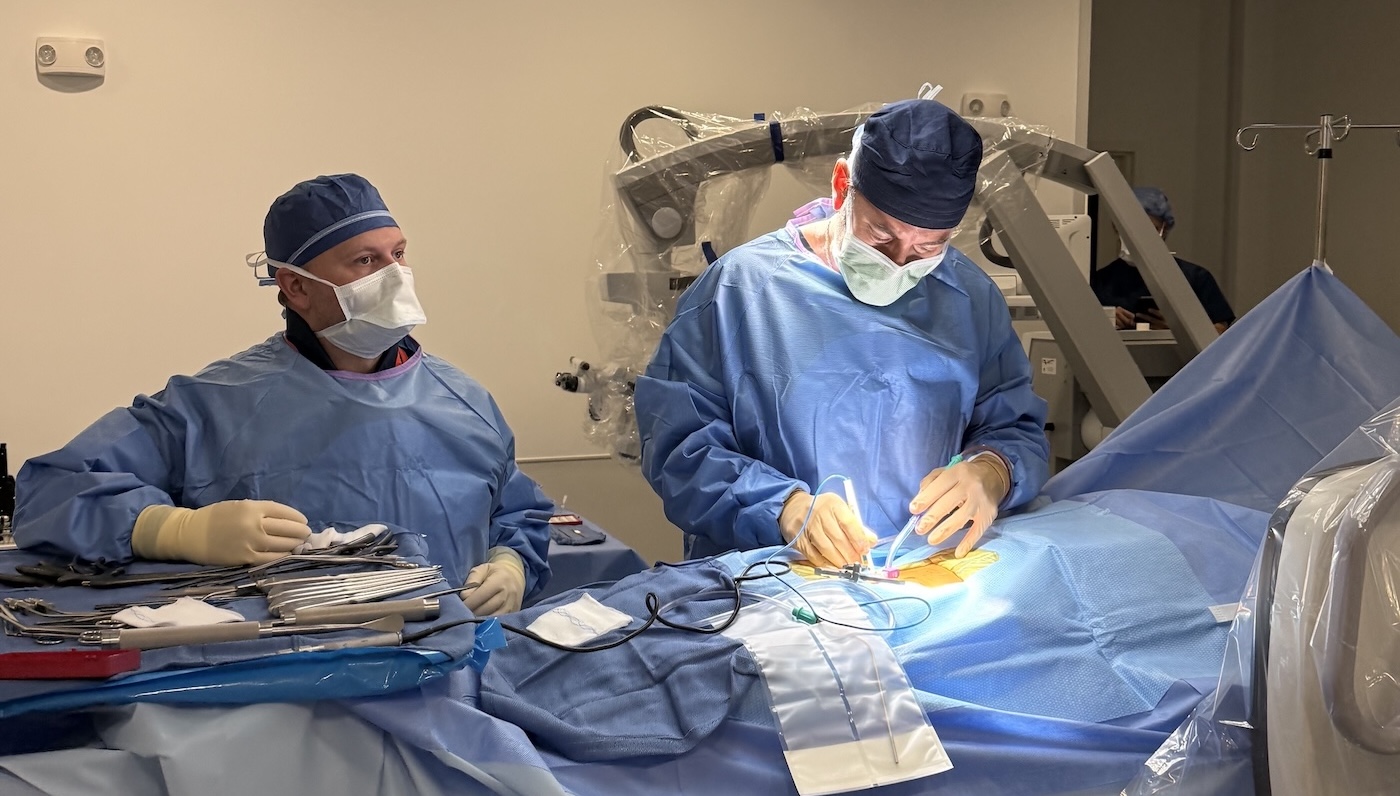
High-volume experience helps a surgeon in ways that rarely show up on an implant brochure. A surgeon who performs ADR routinely is more likely to recognize subtle anatomical variations, anticipate pitfalls before they happen, and make sound intraoperative decisions when things are not “textbook.” In other words, outcomes depend on both the device and the surgeon’s skill and judgment.
What “High Volume” Means In Artificial Disc Replacement
“High volume” can sound like marketing unless you define it in practical terms.
In the context of artificial disc replacement, a high volume surgeon is someone who performs cervical and/or lumbar ADR consistently as a meaningful part of their practice, year after year, not just a handful of cases occasionally. In Dr. Cuéllar’s practice, artificial disc replacement is performed weekly, with procedures regularly occurring multiple times per week as part of routine clinical care.
Some surgeons focus primarily on fusion and perform disc replacement only once in a while. Others build a significant portion of their work around motion-preserving surgery. That difference matters because repetition builds familiarity, and familiarity builds better decision-making in the operating room and more refined patient selection in the clinic.
High volume ADR surgeons also tend to:
- Stay current with evolving implant designs and surgical techniques, because the field is moving quickly. Many are involved in research, teaching, or clinical trials that keep them engaged with new data.
- And importantly, they are often more likely to track outcomes over time, using real feedback to continuously improve how they choose patients and how they operate.
Benefits Of A High Volume ADR Surgeon For Patients
Patients do not choose a “high volume” surgeon because they want a more complicated story. They choose one because they want a clearer path to a safer surgery and a better chance at the outcome they are hoping for.
Better Patient Selection
Not everyone is a good candidate for disc replacement, even if the idea of preserving motion sounds perfect. Experienced ADR surgeons tend to have a sharper sense of which anatomy and conditions respond well, and which situations are better served by fusion, another approach, or continued non-operative care.
This matters because the “best surgery” is not the most advanced one. It is the one that fits your spine and your diagnosis.
More Precise Surgical Technique
ADR requires comfort working around sensitive nerves, vessels, and other vital structures. High volume surgeons develop a consistent feel for implant sizing, centering, and alignment. That precision influences how the disc moves, how forces are distributed through the spine, and how the surrounding joints respond over time.
Reduced Complication Risk
No surgery is risk-free. But familiarity with ADR-specific pitfalls can reduce the chance of issues such as implant malposition, subsidence, or unintended instability. Experience also supports better real-time judgment when something unexpected appears during surgery.
Improved Long Term Outcomes
When the right patient is selected and the implant is placed accurately, patients are more likely to experience meaningful pain relief, improved function, and durable motion at the treated level. Long-term success is rarely one single decision. It is a chain of decisions, made well, from start to finish.
ADR, Motion Preservation, And Long Term Spine Health
A key promise of artificial disc replacement is motion preservation. By maintaining motion at the treated level, ADR may help reduce stress on the discs above and below, which is often discussed in the context of adjacent segment problems.
But that benefit depends heavily on the details, including:
- Choosing the right level or levels for ADR, maintaining or improving alignment, and selecting a device size that avoids over- or under-sizing. Those details influence not only the operated segment, but how your spine functions as a system.
- High volume ADR surgeons tend to think in that “whole spine” way. They are not just focused on replacing a disc. They are focused on restoring balanced motion and protecting long-term mechanics, because that is what patients live with long after the incision heals.
Questions To Ask When Choosing An ADR Surgeon
If you are considering cervical or lumbar disc replacement, you deserve clear answers. A strong consultation should feel like a thoughtful evaluation, not a sales pitch. These questions can help you gauge both experience and decision-making.
- How many cervical and/or lumbar artificial disc replacement procedures do you perform each year?
- Which levels and which devices do you most commonly use, and why?
- How do you decide between ADR and fusion in a case like mine?
- What are your complication rates and how do you monitor your outcomes?
- What does your typical recovery timeline look like for patients with similar health and activity levels?
Pay attention not only to the answers, but how they are delivered. You want a surgeon who can explain the “why” in plain language and who makes you feel comfortable asking follow-up questions.
Red Flags To Watch For When Evaluating Surgeons
This does not need to be dramatic. It is simply about protecting yourself and making sure you are choosing a surgeon who is transparent and experienced in the procedure you are considering.
Potential warning signs include:
- The surgeon cannot estimate how many ADRs they have performed or how frequently they do them.
- They are reluctant to discuss complications, revision possibilities, or long-term follow-up.
- They use a one-size-fits-all approach where nearly every patient is steered toward the same procedure.
No ethical surgeon can promise perfect results or zero risk. But an experienced ADR surgeon should be willing to talk about risks honestly, discuss why you are (or are not) a candidate, and explain the reasoning behind their plan.
How Dr. Cuéllar Approaches ADR As A High Volume Motion Preservation Surgeon
Dr. Jason M. Cuéllar’s approach to artificial disc replacement is grounded in motion preservation and evidence-based decision-making. That starts long before the operating room.
His focus includes cervical and lumbar disc replacement, with careful patient selection based on symptoms, physical exam findings, imaging, and overall health factors that can influence outcomes. Planning matters, especially for alignment, sizing, and implant positioning, and his process emphasizes clarity around expectations, recovery, and long-term spine health.
Just as important, high volume experience informs not only how ADR is performed, but when it should not be performed. A motion-preserving mindset includes knowing when fusion is safer, and when non-operative care may still be the best next step.
Schedule A Consultation With A High Volume ADR Surgeon
If you have been told you need spinal fusion, or you are exploring artificial disc replacement as a motion-preserving option, a detailed consultation can help you understand what fits your spine and your goals.
To speak with Dr. Jason M. Cuéllar, you can schedule a consultation at Cuéllar Spine in Jupiter, Palm Beach Gardens, or Aventura. Patients also travel from across South Florida and beyond for evaluation of motion-preserving spine surgery.
Your case should be assessed individually, with a clear explanation of whether ADR, fusion, or non-operative care is the safest and most effective path. Working with a high volume ADR surgeon can help you make a more confident decision, not just about surgery, but about your long-term spine health.

 Skip to the content