If you have lived with neck or back pain for a while, it is very common to start searching for alternatives to spinal fusion. Many people come across artificial disc replacement (ADR) online or hear about it from a friend and immediately wonder, “Am I a candidate for disc replacement?”
Artificial disc replacement is a motion preserving spine surgery. Instead of removing a damaged disc and permanently fusing the bones together, the surgeon removes the diseased disc and replaces it with an artificial one that is designed to move in a way that is closer to a normal, healthy disc. For the right person, this can relieve pain while allowing more natural movement in the neck or lower back.
In this guide, we explain what can make someone a good artificial disc replacement candidate, when ADR may be a better option than fusion, and situations where another approach might be safer. While this article can give you a clear framework, only a spine surgeon who has studied your imaging and examined you in person can tell you whether ADR is truly right for you.
Artificial disc replacement or ADR is also often referred to as total disc replacement (TDR), lumbar disc arthroplasty (LDA) or cervical disc arthroplasty (CDA).
Understanding Artificial Disc Replacement And How It Differs From Fusion
Artificial disc replacement is performed in two main areas of the spine: the cervical spine (neck) and the lumbar spine (lower back). In both regions, the surgeon removes the damaged disc, frees the pinched nerves, and places a specially designed artificial disc between the vertebrae.
The goal is twofold:
- Remove degenerative or herniation disc(s) causing pain
- Relieve pressure on the nerves
- Preserve motion at that level of the spine so the neck or back can continue to move as naturally as possible.
Spinal fusion approaches the same problem from a different angle. With fusion, the diseased disc is removed and the vertebrae are stabilized with bone graft and hardware so they heal together over time. This can be very effective for pain relief, but it permanently removes motion at that level. Over the years, that loss of movement can increase stress on the discs above and below, which may raise the risk of adjacent segment problems for some patients.
For many people who are good candidates, this is where ADR often has a meaningful advantage:
- It is designed to maintain more natural motion.
- It may place less stress on nearby levels.
- It can help active patients return to work, family life, and sport with fewer long term motion limitations.
Fusion still has an important place, especially when there is instability, deformity, or severe arthritis that an artificial disc cannot correct. However, when the anatomy is favorable and the main issue is a painful or herniated disc at one or two levels, surgeons like Dr. Cuéllar increasingly view artificial disc replacement as the preferred option because it treats the problem while respecting how the spine is meant to move.
General Requirements For ADR Candidacy
A good artificial disc replacement candidate usually meets several broad criteria. Think of these as the starting points that tell a surgeon whether ADR is even worth considering.
1. Symptoms that clearly match a disc problem
Most ADR candidates have:
- Persistent neck or back pain that may radiate into the arm or leg.
- Numbness, tingling, or weakness that follows a nerve pattern.
- Symptoms that line up with the level of the damaged disc or discs.
Random, widespread pain that does not match a specific nerve or spinal level is less likely to be helped by disc replacement alone
2. Failure of conservative treatment
Before surgery is considered, most people have already tried non operative care, such as:
- Physical therapy and targeted exercises
- Anti inflammatory medications or nerve pain medications
- Epidural steroid injections or other image guided injections
- Activity modification and ergonomic changes
If symptoms remain significant after a thoughtful course of conservative care, surgery may enter the discussion.
3. Imaging that shows a damaged disc at one or more levels
For both cervical and lumbar disc replacement, imaging should show a problem that clearly explains the symptoms. Common findings include:
- A herniated disc pressing on a nerve
- Degenerative disc disease associated pain with or without nerve compression
- Disc collapse that matches the pattern of pain and neurologic findings
A full ADR evaluation usually includes:
- A detailed medical history and physical examination
- MRI to look at discs, nerves, and soft tissues
- X rays to assess alignment and movement
- Sometimes CT scans or other advanced studies if needed
- Bone density evaluation
- Metal allergy screening
Only after putting together the story, the exam, and the imaging can a surgeon say whether someone is a realistic artificial disc replacement candidate.
Spine And Imaging Findings That Support ADR
Surgeons do not look only at the disc. To decide if a patient is a good cervical disc replacement candidate or lumbar disc replacement candidate, they study the overall health and alignment of the spine.
Well defined disc disease at one or two levels
ADR typically works best when the main issue is:
- A herniated or degenerated disc at a single level, or
- Occasionally, two or more adjacent levels have disc problems.
Good alignment and stability
The spine should have normal or near normal alignment. Artificial disc replacement is less likely to be recommended when there is:
- A significant curve or deformity
- Noticeable slippage of one vertebra over another (More than grade 1 spondylolisthesis)
- Instability that requires the stabilizing effect of fusion
Artificial discs work best in a segment that is otherwise structurally sound.
Healthy surrounding joints and structures
The facet joints, which sit behind the disc and help guide movement, are especially important. ADR may not be ideal if there is:
- Severe facet joint arthritis at the level of the planned disc replacement
- Advanced multi level spinal stenosis that requires a large decompression
- Pars or facet fractures
In other words, being an artificial disc replacement candidate is not just about having a “bad disc.” The rest of the spine at that level needs to be able to support normal, healthy motion after the implant is in place.
Health And Lifestyle Factors That Make ADR More Successful
Even with the right imaging, your overall health has a big impact on whether ADR is recommended and how well it holds up over time.
In general, surgeons look for:
- Age range that fits motion preservation goals: Dr Cuellar does not believe that there is an age cut off for ADR – but instead the patient’s physiological age is what matters
- Good bone quality: No significant osteoporosis or other bone weakening conditions, so the artificial disc can anchor securely.
- Non smoker or willing to quit: Smoking interferes with healing and increases complications for any spine surgery, including ADR.
- Reasonable weight and fitness level: Excess weight can place additional strain on the spine and the implant, and basic strength and conditioning help support recovery. For lumbar ADR, Dr. Cuéllar generally recommends weight loss to reach a BMI below 35 before the procedure can be considered.
- Willingness to participate in rehab: Patients who are engaged in physical therapy and lifestyle changes generally recover more smoothly and protect their results.
These are guiding principles, not rigid rules. Dr. Cuéllar considers each person’s health, goals, and day to day demands before deciding whether artificial disc replacement is the right fit.
When You May Not Be A Good Candidate For ADR
Not everyone is a good candidate for artificial disc replacement, and that is okay. The most important goal is to choose the procedure that offers the best chance of meaningful, lasting relief.
Common reasons ADR may not be recommended include:
- Severe facet joint arthritis or fracture at the level being considered for disc replacement.
- Pars fracture.
- Significant spondylolisthesis or structural instability that requires fusion to correct.
- Advanced osteoporosis or other bone weakening conditions that do not allow solid implant fixation.
- Certain autoimmune, infection, or tumor related conditions in the spine, where other types of surgery are required.
- Coronal alignment deformity, rotatory deformity or translational deformity
If ADR is not a good fit, it does not mean there is no solution. In many of these situations, another surgical approach may be safer and more reliable in the long term.
The Evaluation Process With Dr. Cuéllar
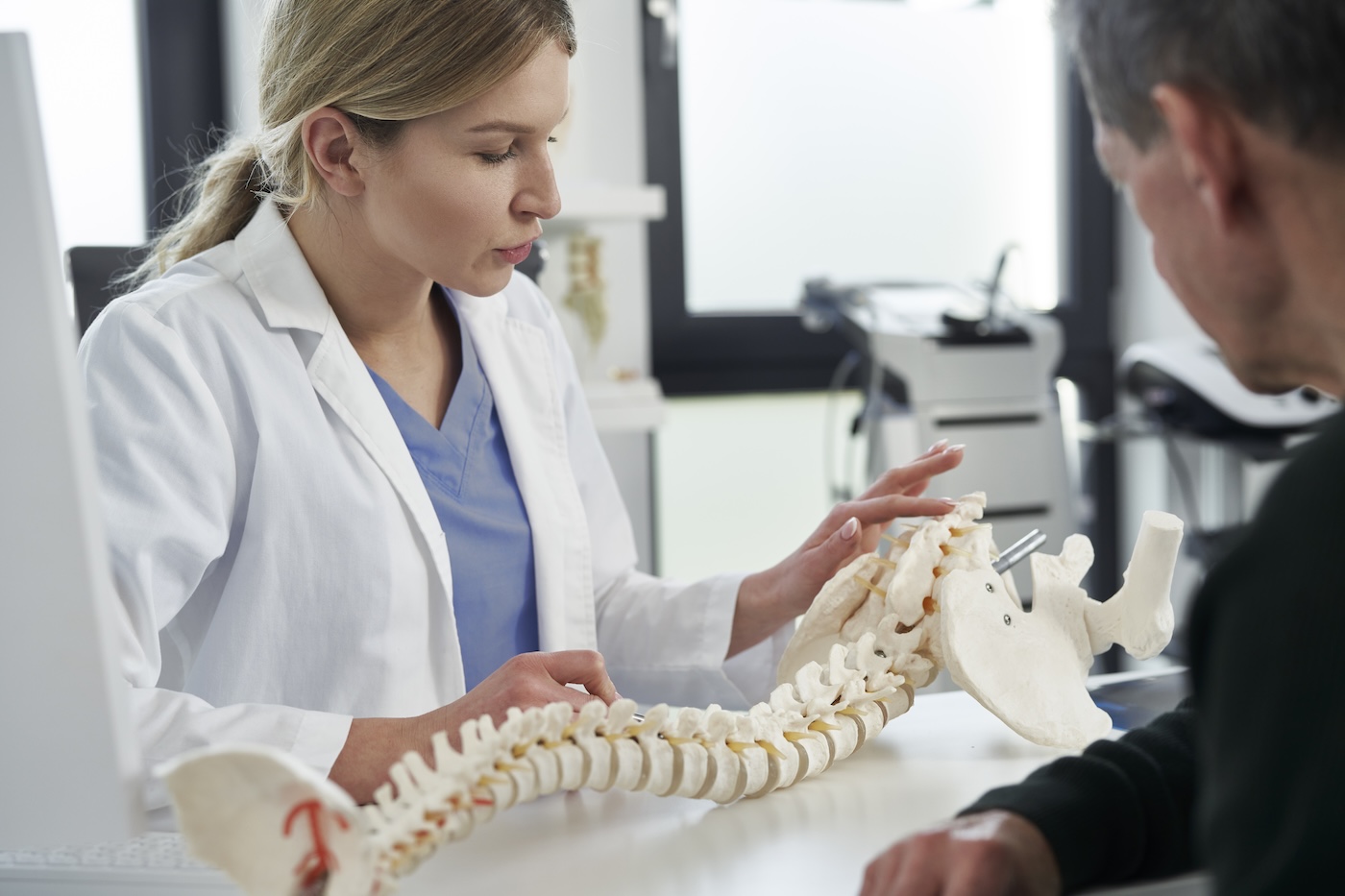
If you are wondering, “Am I a candidate for disc replacement?” the next logical step is a thorough evaluation with a spine surgeon who has specific experience in ADR.
During a consultation with Dr. Cuéllar, you can expect:
- In depth discussion of your symptoms and goals: He will ask how your pain started, what makes it better or worse, how it affects your work, family life, and daily activities, and what you hope to be able to do after treatment.
- Detailed review of imaging: Existing MRIs, X rays, and other studies are carefully reviewed. If images are outdated or incomplete, updated studies may be ordered to see the current condition of your spine.
- Assessment of overall health: Medical history, medications, bone health, and lifestyle factors such as smoking and activity level are all considered. These details help determine your surgical risk and your ability to heal.
- Explanation of all reasonable options: Dr. Cuéllar will outline non operative care, artificial disc replacement, and fusion when appropriate. You will hear the benefits, risks, and realistic expectations for each option in clear, understandable language.
Dr. Cuéllar focuses on motion preserving solutions like ADR when they are supported by evidence and anatomy. He also believes in avoiding unnecessary fusion when a less invasive or motion preserving approach can give equal or better results. The decision is collaborative so that you understand what is recommended and why.
Questions To Ask If You Are Considering ADR
Provide a short checklist style section to empower patients:
- Am I a candidate for cervical or lumbar artificial disc replacement based on my imaging and symptoms?
- How does ADR compare to fusion in my specific case in terms of pain relief, motion, and long term outlook?
- What are the risks and potential complications of ADR for someone with my health profile?
- How many artificial disc replacement procedures have you performed and what have your outcomes been like?
- What is the expected recovery timeline and when can I return to work, exercise, or sports?
Writing these questions down and bringing them to your appointment can help you leave with a clear plan and fewer uncertainties.
ADR And The Future Of Motion Preserving Spine Surgery
Artificial disc replacement is part of a larger movement in spine surgery toward preserving natural motion whenever it is safe to do so. As implant designs improve and surgical techniques become more refined, more patients may be able to benefit from motion preserving options.
At the same time, careful patient selection remains essential. Not everyone is a good candidate for artificial disc replacement, even with the latest technology. The best outcomes come when the right procedure is matched to the right patient for the right reasons.
Dr. Cuéllar is deeply invested in evidence-based motion preservation in both the cervical and lumbar spine. His practice combines advanced surgical techniques with a thoughtful, individualized approach to each patient instead of a one size fits all philosophy.
Schedule A Consultation To See If You Are A Candidate For ADR
If you have been told you need fusion, or if you have ongoing disc related neck or back pain that has not responded to conservative care, it may be time to find out whether artificial disc replacement is an option for you.
Dr. Jason M. Cuéllar sees patients at Cuéllar Spine in Jupiter, Palm Beach Gardens, and Aventura, and frequently evaluates people who travel from across South Florida and beyond for motion preserving spine care.
Whether you turn out to be an ideal artificial disc replacement candidate or not, you will receive a careful assessment, a clear explanation of your diagnosis, and a treatment plan tailored to your goals. To explore your options and find out what is possible for your spine, contact Cuéllar Spine to request a consultation.

 Skip to the content