For patients with chronic low back pain, leg pain, stiffness, or limited mobility, spine surgery can feel like a major decision. Many are told they may need lumbar fusion, but for select patients, newer motion-preserving technologies may offer another path.
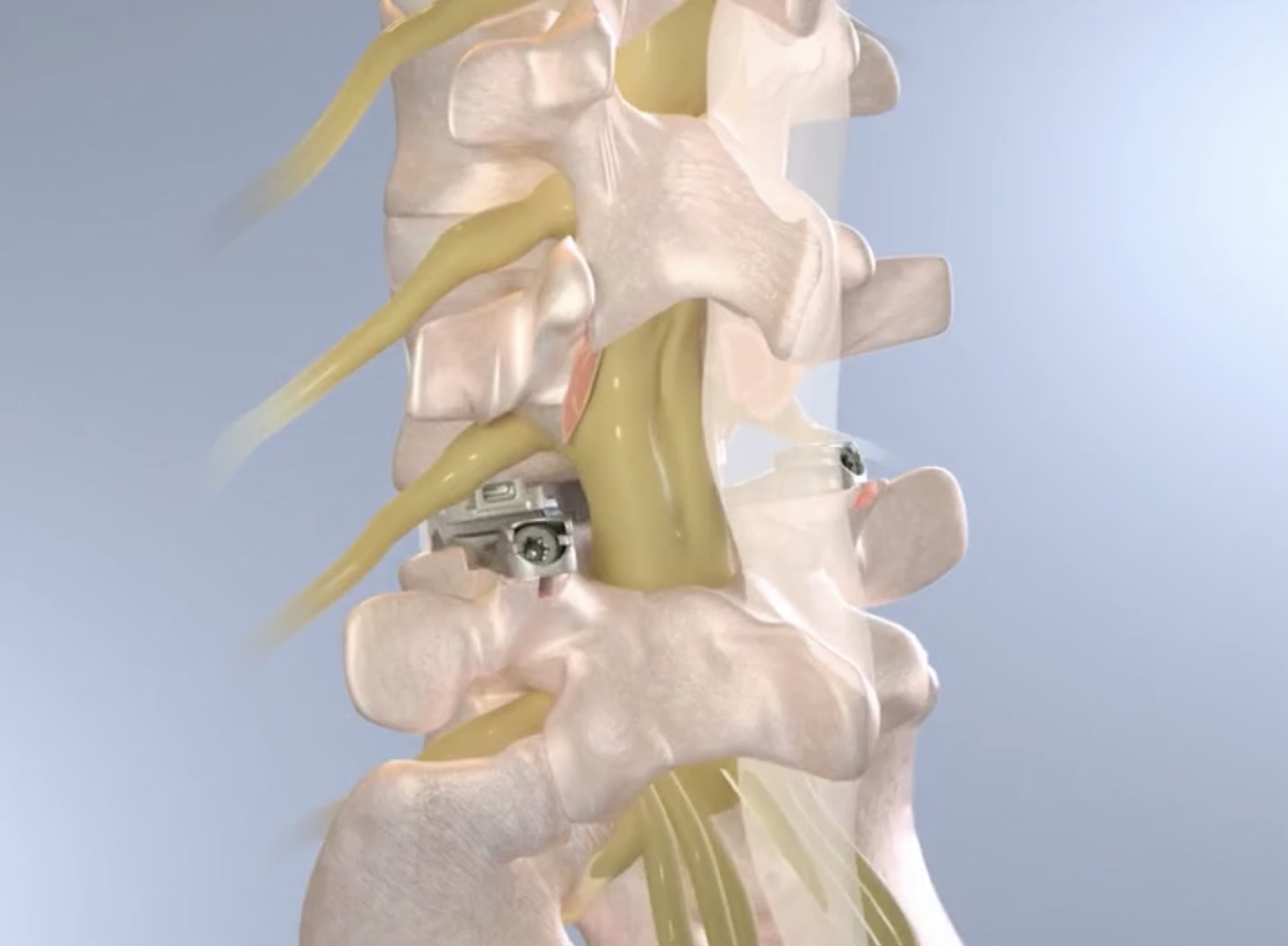
MOTUS® by 3Spine is a lumbar total joint replacement system designed to replace the function of the spinal disc and facet joints. Unlike traditional fusion, which eliminates motion at the treated level, MOTUS was developed with the goal of restoring stability while helping preserve movement in the lower back.
At Cuéllar Spine, Dr. Jason M. Cuéllar provides advanced spine evaluations for patients in Jupiter, Palm Beach, Palm Beach Gardens, Aventura, and surrounding South Florida communities. His goal is to help patients understand their diagnosis, compare all appropriate treatment options, and make confident decisions about their spine health.
What Is Lumbar Total Joint Replacement?
Lumbar total joint replacement is a motion-preserving spine surgery concept designed to address more than the disc alone. While lumbar disc replacement focuses on replacing a damaged spinal disc, MOTUS® by 3Spine is designed to replace the function of both the disc and the facet joints — two key structures that help the lower spine move, absorb stress, and maintain stability.
This distinction matters because many patients with advanced lumbar degeneration do not have pain from the disc alone. The facet joints, spinal nerves, alignment, and overall motion segment may also play a role.
MOTUS is intended to reconstruct the lumbar motion segment after decompression while helping preserve movement at the treated level. That said, not every patient with low back pain is a candidate. Determining whether lumbar total joint replacement is appropriate requires detailed imaging, a physical examination, and a careful review of symptoms, prior treatments, and long-term goals.
How MOTUS® Is Different from Lumbar Fusion
Lumbar fusion has helped many patients find relief from painful spinal instability, deformity, nerve compression, and advanced degeneration. In the right case, fusion can be an excellent treatment. However, because fusion stops motion at the treated level, some patients want to know whether a motion-preserving option may be appropriate.
The key distinction is simple:
Lumbar fusion stabilizes the spine by eliminating motion at the treated level.
MOTUS lumbar total joint replacement is designed to stabilize the segment while preserving motion.
For patients, this difference may matter because the lower back is involved in nearly every daily movement, including:
Sitting and standing
Walking
Bending
Lifting
Driving
Getting in and out of bed or a chair
Returning to work, exercise, or daily activities
Preserving motion may be an important consideration for certain patients, especially those who are active, concerned about adjacent-level stress, or seeking a second opinion before fusion.
Still, motion preservation is not always the safest or most effective option. Some conditions require fusion or another surgical approach. That is why a careful evaluation by an experienced spine surgeon is essential.
Who May Be a Candidate for MOTUS®?
Candidacy for lumbar total joint replacement is highly specific. A patient’s symptoms alone are not enough to determine whether MOTUS or any other surgical procedure is appropriate.
Patients who explore lumbar total joint replacement may have:
Prior treatments, including physical therapy and injections
Overall health and surgical risk factors
Bone quality
Activity level and recovery goals
Whether non-surgical treatment has been fully explored
Just as important, not every patient is a good candidate. Some patients may still require fusion or another treatment approach depending on their condition, anatomy, and overall health.
Patients may not be candidates for lumbar total joint replacement if they have certain concerns such as:
Severe osteoporosis or poor bone quality
Significant spinal deformity
Certain traumatic injuries
Active infection
Major medical risk factors
Poorly controlled diabetes
Smoking-related surgical risks
Multi-level disease requiring a different approach
This is one reason Dr. Cuéllar’s approach begins with diagnosis, not assumptions. The right treatment should match the patient’s anatomy, condition, lifestyle, and long-term goals.
Conditions That May Lead Patients to Explore Lumbar Total Joint Replacement
Patients often begin researching MOTUS or lumbar total joint replacement after years of trying to manage symptoms with conservative care. Some have difficulty standing for long periods. Others struggle with pain that travels into the buttock or leg. Some feel limited by stiffness, weakness, or recurring flare-ups that interfere with work, exercise, travel, or daily routines.
Conditions that may lead to a discussion about advanced lumbar surgery include:
Persistent back and leg pain despite conservative treatment
In many cases, symptoms overlap. A patient may have both disc-related pain and facet-related pain. Another may have nerve compression along with structural instability. That is why the evaluation process is so important. Treating the wrong pain generator can lead to poor outcomes, while a precise diagnosis can help guide the safest and most effective plan.
What to Expect During Your Consultation with Dr. Cuéllar
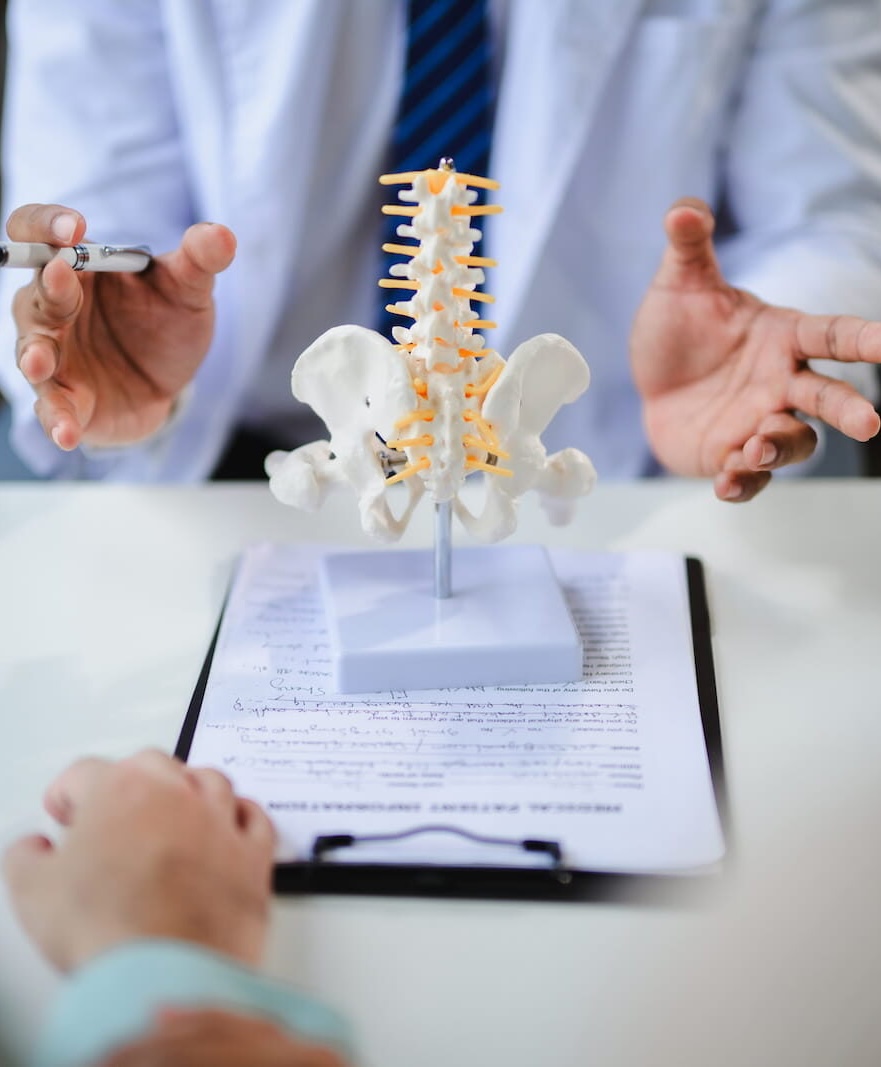
A consultation for advanced spine surgery is not about rushing into an operation. It is about identifying the true source of your pain and determining whether surgery is actually the right next step.
During your visit, Dr. Cuéllar will review your symptoms, medical history, prior treatments, and imaging studies such as MRI, CT, or X-rays. He will also discuss whether your pain may be coming from the disc, facet joints, nerves, spinal alignment, or a combination of factors.
From there, he will explain your options clearly, which may include continued conservative care, injections, minimally invasive spine surgery, lumbar disc replacement, fusion, or motion-preserving procedures when appropriate. For patients who have already been told they need fusion, this consultation can also provide a valuable second opinion.
MOTUS® Availability and Important Patient Information
MOTUS is an emerging technology and should be discussed with careful attention to its current regulatory status. 3Spine currently describes MOTUS as an investigational device in the United States, limited by U.S. law to investigational use under an FDA Investigational Device Exemption.
Because the status of medical devices can change, patients should speak directly with Dr. Cuéllar’s team to understand current availability, candidacy, alternatives, risks, and whether any approved or investigational motion-preserving options may apply to their case.
This page is intended for education and consultation planning. It should not be interpreted as a guarantee that MOTUS is available or appropriate for every patient.
Why Choose Dr. Jason M. Cuéllar for Advanced Spine Care?
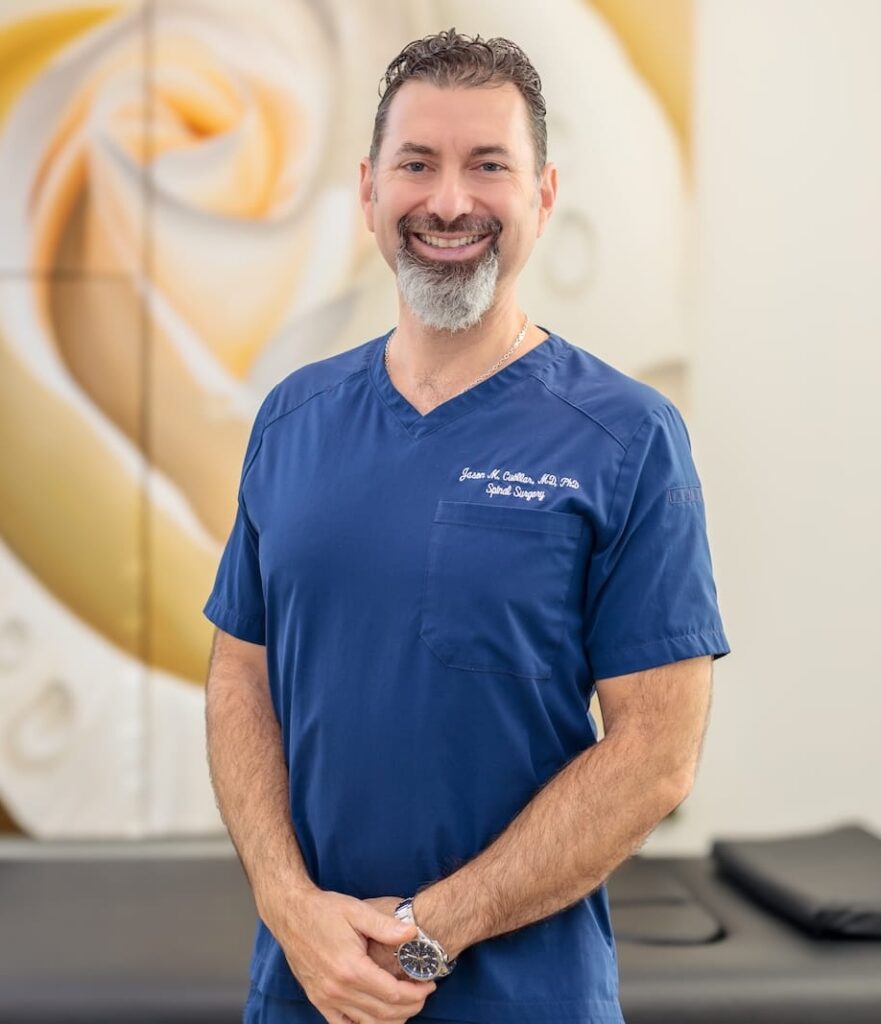
Dr. Jason M. Cuéllar is a board-certified orthopaedic spine surgeon with experience in minimally invasive and motion-preserving spine procedures. His approach is centered on accurate diagnosis, clear communication, and personalized treatment planning.
At Cuéllar Spine, patients can expect:
A diagnosis-first approach
Personalized surgical and non-surgical recommendations
Experience with advanced spine procedures
Conservative care when appropriate
Clear guidance before making treatment decisions
Whether you are exploring lumbar total joint replacement, seeking an alternative to fusion, or looking for a second opinion, Dr. Cuéllar can help you better understand your options.
Schedule a Consultation with a Spine Surgeon Serving South Florida
If you have been told you may need lumbar fusion, or you are researching motion-preserving spine surgery options such as MOTUS® total joint replacement, Dr. Jason M. Cuéllar can help you better understand your diagnosis and next steps.
Cuéllar Spine serves patients across Palm Beach County and South Florida, including Jupiter, Palm Beach, Boca Raton, Fort Lauderdale, Miami, Aventura, and surrounding communities.
Schedule a consultation with Cuéllar Spine today to receive a personalized evaluation from a board-certified orthopaedic spine surgeon and explore the treatment options that may be right for you.

 Skip to the content