One of the most common questions patients ask before spine surgery is: “Will I have to wear a brace afterward?”
The answer depends on the type of surgery, the stability of the spine, the number of levels treated, bone quality, and your surgeon’s recovery plan. Some patients need a brace for support and motion control. Others do not need one at all.
When Is a Brace Needed After Spine Surgery?
A brace may be recommended when the spine needs extra support during early healing. This is more common after procedures involving spinal instability, fusion, fractures, deformity correction, or multiple spinal levels.
A brace may help:
- Limit bending, twisting, or sudden movements
- Support the surgical area while tissues heal
- Improve comfort during walking or daily activities
- Remind patients to follow movement restrictions
However, not every patient needs one. With some minimally invasive or motion-preserving procedures, the spine may already have enough stability after surgery.
Types of Braces Used After Spine Surgery
The type of brace used depends on which part of the spine was treated and how much support is needed during recovery.
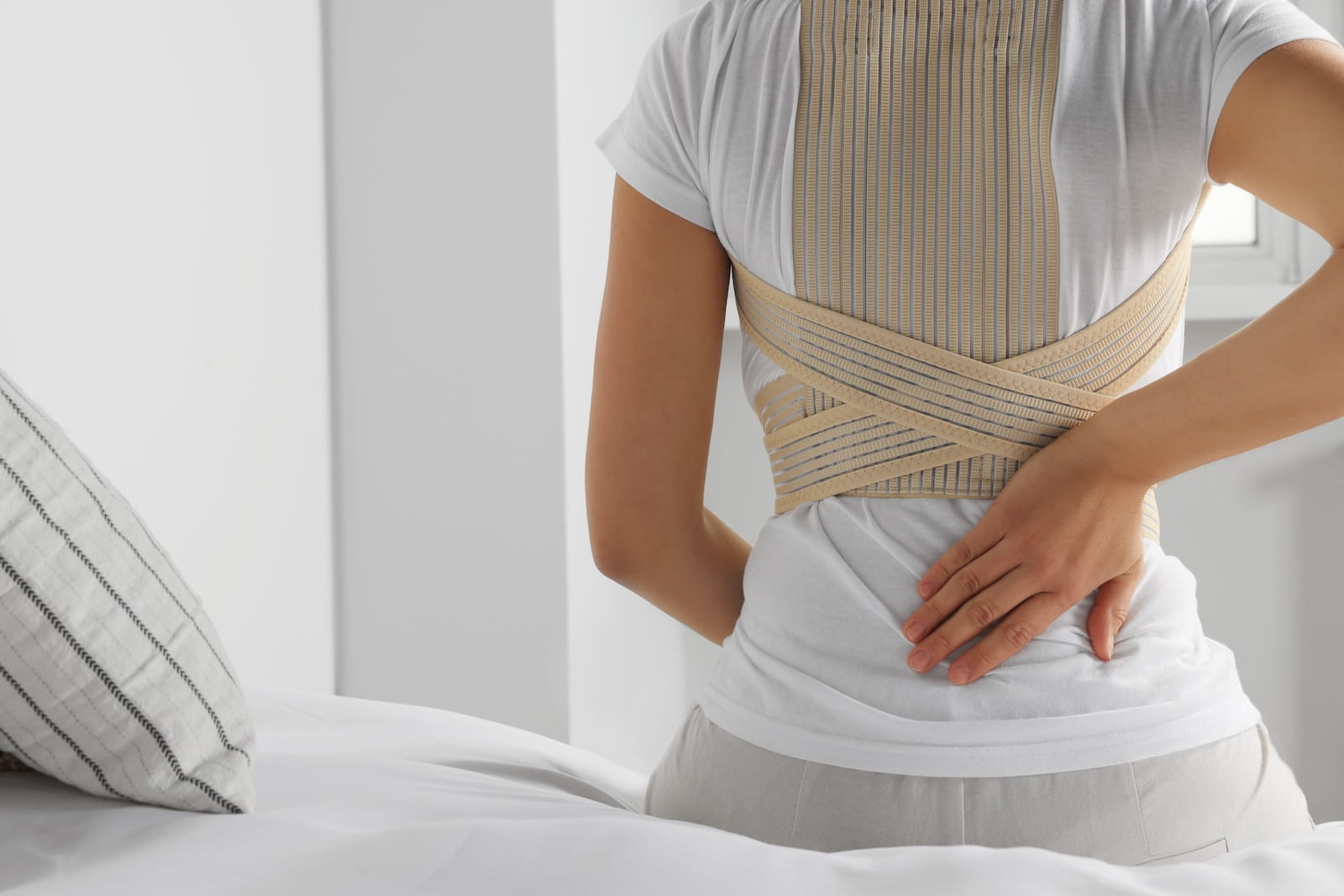
- Lumbar brace: Supports the lower back after certain lumbar procedures.
- Abdominal binder: A soft, wraparound support that may be used after certain spine surgeries to provide gentle compression, support the incision area, and improve comfort during early movement.
- Cervical collar: Supports the neck after cervical spine surgery (this may not be necessary after cervical disc replacement).
- Thoracic or thoracolumbar brace: Supports the mid-back or upper lower back after more involved procedures.
- Rigid brace: Provides more restriction when extra stability is needed during healing.
- Soft brace or collar: Offers lighter support and may be used more for comfort than strict motion control.
Which Spine Surgeries Are More Likely to Require a Brace?
Patients are more likely to need a brace after procedures where spinal stability is a major concern. This may include:
- Spinal fusion, especially multilevel fusion
- Revision spine surgery
- Surgery for spinal deformity, such as scoliosis or kyphosis
- Surgery involving fractures or trauma
- Procedures performed in patients with poor bone quality
- Cases involving significant instability before surgery
- Complex cervical or thoracic procedures
On the other hand, many patients who undergo smaller decompression procedures, microdiscectomy, or certain motion-preserving surgeries may not require a brace at all. This varies by patient and surgeon.
For example, artificial disc replacement is designed to preserve motion rather than eliminate it. Cuéllar Spine highlights artificial disc replacement as a motion-preserving procedure intended to maintain spinal flexibility while relieving pain. Because the goals of this surgery are different from fusion, the post-operative bracing plan may also be different.
How Long Do You Have to Wear a Brace After Spine Surgery?
Some patients wear a brace only for comfort during the first few days or weeks. Others may need one for several weeks, especially after fusion, fracture repair, revision surgery, or complex stabilization procedures.
Your surgeon will decide when it is safe to stop wearing the brace based on your procedure, symptoms, follow-up imaging, and healing progress.
What Wearing a Brace Feels Like Day to Day
A brace can feel awkward at first. That is normal. It may affect how you sit, sleep, dress, shower, and move around the house.
Many patients wonder about basic routines, such as:
Can I sleep in it?
Sometimes yes, sometimes no. Some braces are worn only when upright. Others may need to be worn more consistently. Follow your specific instructions.
Can I shower without it?
Often, patients are allowed to remove the brace for showering once cleared, but this depends on the surgery, incision care, and fall risk.
Can I drive with a brace?
Driving after spine surgery depends on more than the brace. You typically need to be off narcotic pain medication, able to move safely, and cleared by your surgeon.
What should I wear under it?
A thin, clean, fitted cotton shirt often helps reduce rubbing and skin irritation.
Is discomfort normal?
Mild pressure can be normal. Sharp pain, numbness, skin breakdown, or breathing restriction is not.
The brace should support you. It should not create new problems.
Can Wearing a Brace Too Much Be a Problem?
Yes, in some cases. A brace that is worn longer than needed may contribute to stiffness, dependence, discomfort, or muscle deconditioning. That is one reason bracing should be guided by a surgeon rather than treated as a one-size-fits-all rule.
Your spine needs protection after surgery, but your body also needs movement. Walking, gentle activity, and later rehabilitation all play an important role in recovery. The balance between support and mobility is different for every patient.
This is where an experienced spine surgeon’s guidance matters. The goal is to protect the surgical repair without slowing the return of healthy movement.
Signs Your Brace May Not Fit Correctly
A properly fitted brace should feel supportive and secure. It should not cause severe pain or interfere with basic function.
Call your surgeon’s office if your brace causes:
- New numbness or tingling
- Increased pain while wearing it
- Skin sores, blisters, or raw areas
- Trouble breathing or swallowing
- Excessive pressure on the ribs, hips, neck, or incision
- A brace that rides up, shifts, or will not stay in place
- Weakness or balance changes
Recovery Is More Than the Brace
A brace is only one part of spine surgery recovery. In many cases, the bigger factors are proper diagnosis, precise surgical planning, safe movement, and consistent follow-up.
Recovery may include:
- Walking soon after surgery when cleared
- Avoiding bending, lifting, and twisting during early healing
- Keeping follow-up appointments
- Monitoring the incision
- Using medications only as directed
- Starting physical therapy when appropriate
- Gradually returning to normal activity
Dr. Cuéllar’s approach emphasizes individualized treatment, patient education, minimally invasive techniques when appropriate, and careful post-operative guidance.
Questions to Ask Your Spine Surgeon About Bracing
Before surgery, it is reasonable to ask direct questions about what recovery will look like. Helpful questions include:
- Will I need a brace after this procedure?
- Is the brace for stability, comfort, or both?
- How many hours per day should I wear it?
- Should I wear it while sleeping?
- Can I remove it to shower?
- How long will I need it?
- When will we decide whether I can stop wearing it?
- What symptoms mean the brace is not fitting correctly?
- Will wearing a brace affect physical therapy or walking?
These questions help you understand not only what to do, but why you are doing it.
Schedule a Consultation with Dr. Jason M. Cuéllar
If you have been told you may need spine surgery, or you are preparing for recovery and want clearer guidance, Dr. Jason M. Cuéllar can help you understand your options.
Dr. Cuéllar is a board-certified, award-winning orthopaedic spine surgeon specializing in advanced spine care, including minimally invasive spine surgery, artificial disc replacement, and non-surgical treatment options. Cuéllar Spine welcomes patients from across the country, with in-person consultations available in Palm Beach County and Jupiter.
Schedule a consultation today to receive a personalized evaluation and a recovery plan built around your spine, your lifestyle, and your long-term goals.

 Skip to the content