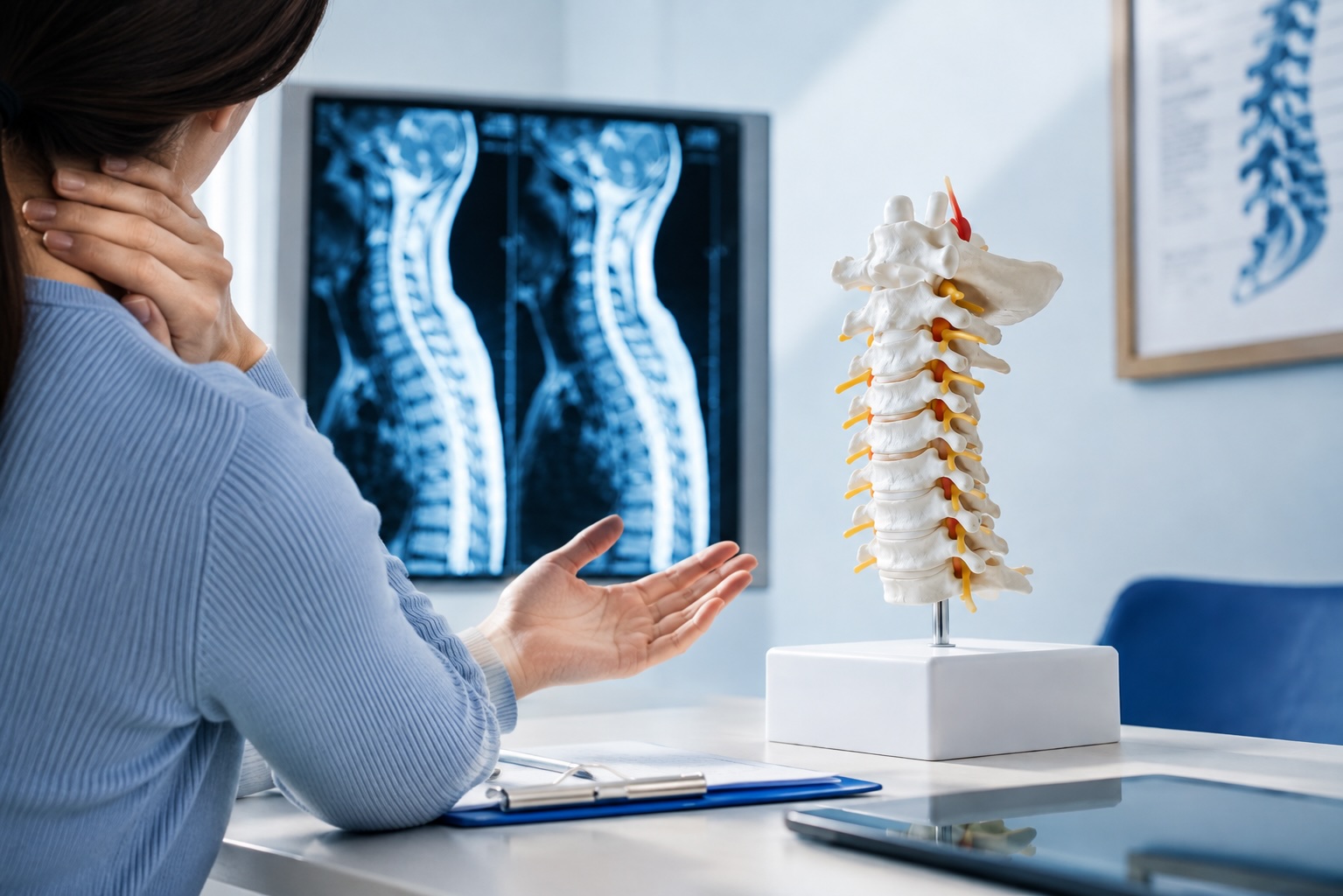
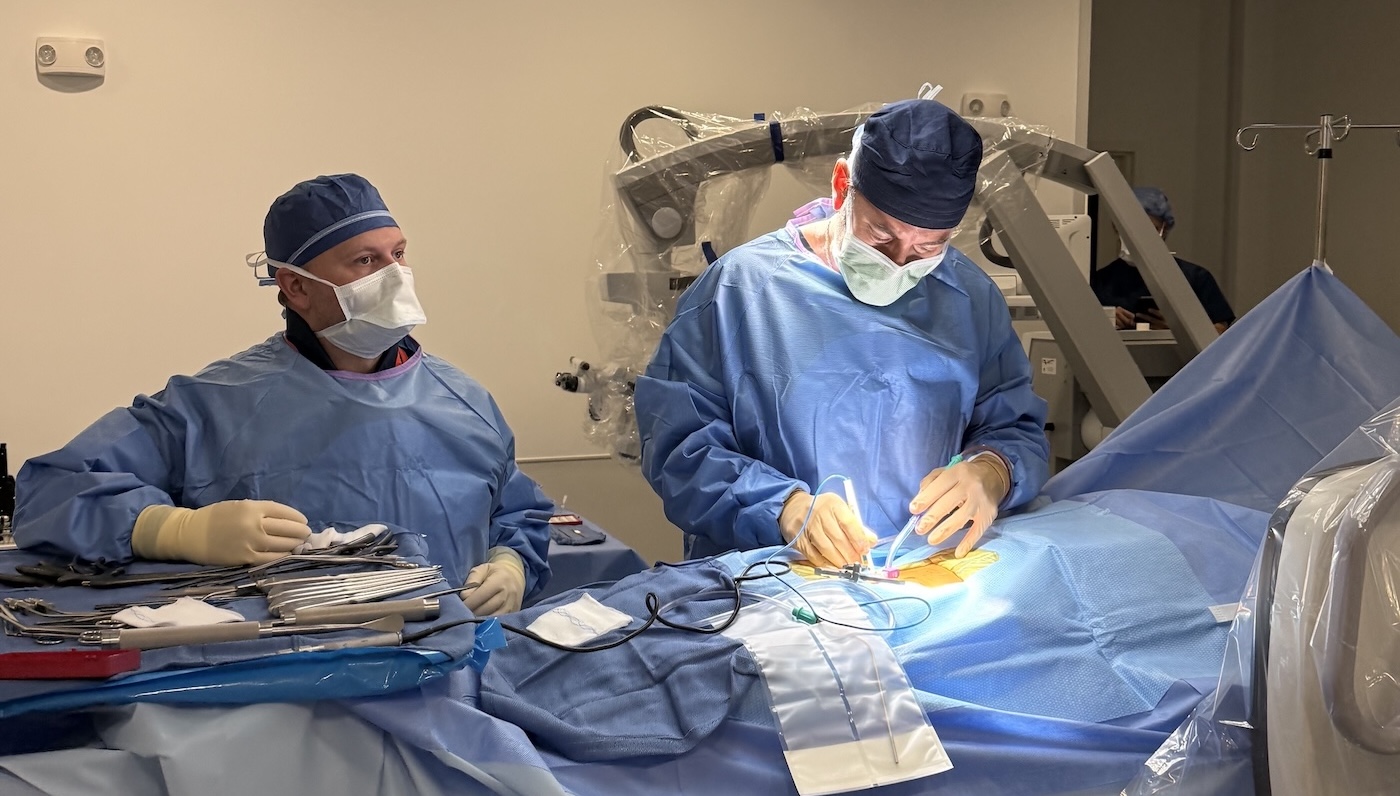
For patients with chronic neck or back pain caused by damaged spinal discs, total disc replacement can be an appealing alternative to spinal fusion. Instead of permanently locking two bones together, disc replacement is designed to remove the painful disc and replace it with an artificial implant that helps preserve motion at that level.
But what happens when more than one disc is damaged?
That is where multi-level total disc replacement may be considered. For select patients with damage at two adjacent discs, this procedure may offer a way to treat the painful levels while preserving motion.
What Is Multi-Level Total Disc Replacement?
Multi-level total disc replacement is a spine surgery that replaces more than one damaged spinal disc with artificial disc implants. In most cases, this refers to two adjacent levels, such as two levels in the neck or lower back.
During the procedure, the damaged discs are removed, pressure may be taken off the affected nerves, and artificial discs are placed to help maintain spacing and motion between the vertebrae.
The goal is not simply to replace a worn-out disc. The goal is to treat the actual pain generator while preserving as much natural spinal movement as safely possible.
Multi-level disc replacement may be considered in either the:
- Cervical spine, which is the neck region
- Lumbar spine, which is the lower back region
Candidacy is highly specific. Just because a patient has two worn discs on an MRI does not automatically mean they need or qualify for two-level disc replacement.
Multi-level disc replacement is also technically more complex than single-level disc replacement. Treating more than one spinal level requires careful planning, precise implant placement, and a strong understanding of how motion at one level affects the levels above and below it.
Why Preserving Motion Matters
Spinal fusion can be very effective when the spine needs stability, but it also stops movement at the treated level. For certain patients, total disc replacement may offer another option by treating the damaged disc while helping maintain more natural motion.
The key is choosing the right procedure for the right diagnosis. Motion preservation is only beneficial when the surrounding joints, spinal alignment, and overall anatomy can safely support it.
Cervical vs. Lumbar Multi-Level Disc Replacement
Multi-level disc replacement can mean different things depending on whether the damaged discs are in the neck or lower back.
In the cervical spine, two-level artificial disc replacement may be an option for select patients with symptomatic cervical disc disease, such as nerve compression causing neck pain, arm pain, numbness, tingling, or weakness.
In the lumbar spine, multi-level disc replacement is typically more selective because the lower back carries more body weight and is exposed to greater mechanical stress. Careful evaluation is needed to determine whether the discs, facet joints, spinal alignment, and overall anatomy can safely support motion preservation.
This does not mean every patient with multiple painful discs is a candidate. It means the option may exist for carefully selected patients when the diagnosis, anatomy, and surgical goals align.
Who May Be a Candidate for Multi-Level Disc Replacement?
The best candidates for multi-level total disc replacement typically have symptoms that clearly match one or two damaged discs, along with imaging that supports the diagnosis. Most have already tried non-surgical treatments without lasting relief.
A patient may be considered if they have:
- Confirmed disc degeneration at appropriate levels
- Persistent symptoms despite conservative care
- Healthy or reasonably preserved facet joints
- Good spinal alignment and stability
- Good bone quality
For cervical cases, symptoms may include neck pain with arm pain, numbness, tingling, or weakness from nerve compression. For lumbar cases, symptoms often include chronic disc-related low back pain, with or without leg symptoms.
Who May Not Be a Candidate?
Multi-level disc replacement is not recommended for every spine condition. Patients may not be candidates if they have severe facet joint arthritis, poor bone quality, spinal instability, significant deformity, infection, or pain that does not clearly come from the damaged disc.
In these cases, another approach, such as decompression, fusion, or continued non-surgical care, may be more appropriate.
Multi-Level Disc Replacement vs. Fusion
Many patients considering multi-level disc replacement are also comparing it to spinal fusion. The main difference is motion.
Fusion joins two or more vertebrae together to create stability, which can be the right choice for instability, deformity, or more advanced degeneration. Disc replacement removes the damaged disc and replaces it with an artificial implant designed to preserve motion at that level.
Neither option is automatically better. The right choice depends on what is causing the pain, how stable the spine is, and whether the surrounding joints can safely support motion.
Why Surgeon Experience Matters in Multi-Level Disc Replacement
Because multi-level disc replacement is more technically demanding than single-level surgery, surgeon experience plays an important role in planning and execution. The surgeon must understand when motion preservation is appropriate, how to position each implant precisely, and how multiple treated levels may affect overall spinal mechanics.
This is why patients should seek out a spine surgeon with extensive experience in artificial disc replacement and advanced motion-preserving procedures, especially when more than one level is involved.
Questions to Ask Before Multi-Level Total Disc Replacement
If you are considering multi-level disc replacement, the consultation should help you understand whether the procedure fits your specific diagnosis, anatomy, and goals.
Helpful questions include:
- Am I truly a candidate for multi-level disc replacement?
- Which levels are causing my symptoms?
- Are my facet joints and spinal alignment healthy enough for motion preservation?
- Would fusion, decompression, or continued non-surgical care be more appropriate?
- How much experience do you have with multi-level artificial disc replacement?
- What should I expect during recovery?
A strong surgical recommendation should come with clear reasoning. You should understand why this procedure is being recommended and what alternatives may be available.
Recovery After Multi-Level Disc Replacement
Recovery varies based on whether the procedure is performed in the cervical or lumbar spine, how many levels are treated, the patient’s overall health, and the physical demands of their daily life.
In general, patients can expect a structured recovery plan that may include walking soon after surgery, temporary activity restrictions, follow-up imaging, and physical therapy when appropriate.
Because disc replacement is designed to preserve motion, recovery often focuses on gradually restoring mobility while protecting the surgical site as the body heals around the implant.
Patients should avoid comparing their recovery timeline to someone else’s. A two-level cervical disc replacement, for example, is not the same as a two-level lumbar disc replacement. Each case has its own considerations.
Is Multi-Level Total Disc Replacement Right for You?
Multi-level total disc replacement can be an excellent option for select patients, but it is not a one-size-fits-all solution. The best outcomes come from matching the right procedure to the right diagnosis.
For some patients, preserving motion with artificial disc replacement may offer meaningful benefits. For others, fusion, decompression, or continued non-surgical care may be the safer and more effective path.
The most important step is getting a thorough evaluation from a spine surgeon who understands both motion-preserving surgery and traditional stabilization procedures. That way, the recommendation is based on what your spine actually needs, not a generic preference for one procedure over another.
Schedule a Consultation with Dr. Jason M. Cuéllar
If you have been told you may need spinal fusion, or you are researching multi-level total disc replacement as a motion-preserving alternative, Dr. Jason M. Cuéllar can help you understand your options.
Cuéllar Spine serves patients locally in Palm Beach County, including Jupiter, Palm Beach Gardens, Palm Beach, Boca Raton, and Aventura, as well as patients traveling from across the country for advanced spine care.
Schedule a consultation today to find out whether multi-level total disc replacement may be right for you.

 Skip to the content