Pain that starts in the lower back and travels into the buttock or leg does not always come from the muscles of the back itself. In some cases, the problem begins with a spinal nerve that has become compressed or irritated. This is known as lumbar radiculopathy.
Symptoms can range from occasional tingling to persistent leg pain, numbness, or muscle weakness. Some people have significant leg symptoms with surprisingly little lower back pain.
Understanding where those symptoms are coming from is the first step toward choosing the right treatment.
What Is Lumbar Radiculopathy?
Lumbar radiculopathy occurs when one of the nerve roots in the lower spine becomes irritated or compressed.
These nerves leave the lumbar spine and travel into the hips and legs. When pressure develops around a nerve root, symptoms can follow the path of that nerve rather than staying confined to the lower back.
That is why lumbar radiculopathy may cause pain or numbness extending into the buttock, thigh, calf, foot, or toes.
Which part of the leg is affected can also provide clues about which nerve root is involved. However, symptoms alone are not enough to determine the exact cause. A proper diagnosis requires looking at the patient’s symptoms, examination, and imaging together.
What Does Lumbar Radiculopathy Feel Like?
Lumbar radiculopathy can feel different from one patient to another. Common symptoms include:
- Sharp, burning, or electric-like pain traveling into the leg
- Tingling or a “pins and needles” sensation
- Numbness in part of the leg or foot
- Weakness in the leg, ankle, or foot
- Pain that changes with certain positions or activities
The pain may come and go or remain constant. Sitting, bending, walking, or coughing may worsen symptoms depending on the source of nerve irritation.
Lower back pain can also be mild even when leg pain, numbness, or weakness is significant.
Lumbar Radiculopathy vs. Sciatica
The terms lumbar radiculopathy and sciatica are often used interchangeably, but they are not exactly the same thing.
Lumbar radiculopathy refers to symptoms caused by irritation or compression of a specific nerve root in the lumbar spine.
Sciatica more broadly describes pain that follows the course of the sciatic nerve, typically from the buttock into the leg. Compression of certain lumbar nerve roots is one of the most common reasons someone develops sciatica.
Sciatica describes a pattern of pain that travels along the sciatic nerve, while lumbar radiculopathy refers more specifically to irritation or compression of a spinal nerve root.
What Causes Lumbar Radiculopathy?
Anything that reduces the space around a lumbar nerve root can potentially cause radiculopathy.
Common causes include:
Herniated disc: Disc material can bulge or herniate into the space surrounding a nerve, creating inflammation and pressure.
Foraminal stenosis: The openings through which spinal nerves leave the spine can become narrowed.
Lumbar spinal stenosis: Degenerative changes may narrow areas of the spinal canal and place pressure on nearby nerves.
Bone spurs: Arthritic changes can cause extra bone to develop around the joints of the spine, sometimes reducing the available space for a nerve.
Degenerative changes: As discs lose height with age or wear, the space available for a nerve may become smaller.
Spondylolisthesis: When one vertebra shifts relative to another, the change in alignment may contribute to nerve compression.
More than one of these problems can also occur at the same time.
How Is Lumbar Radiculopathy Diagnosed?
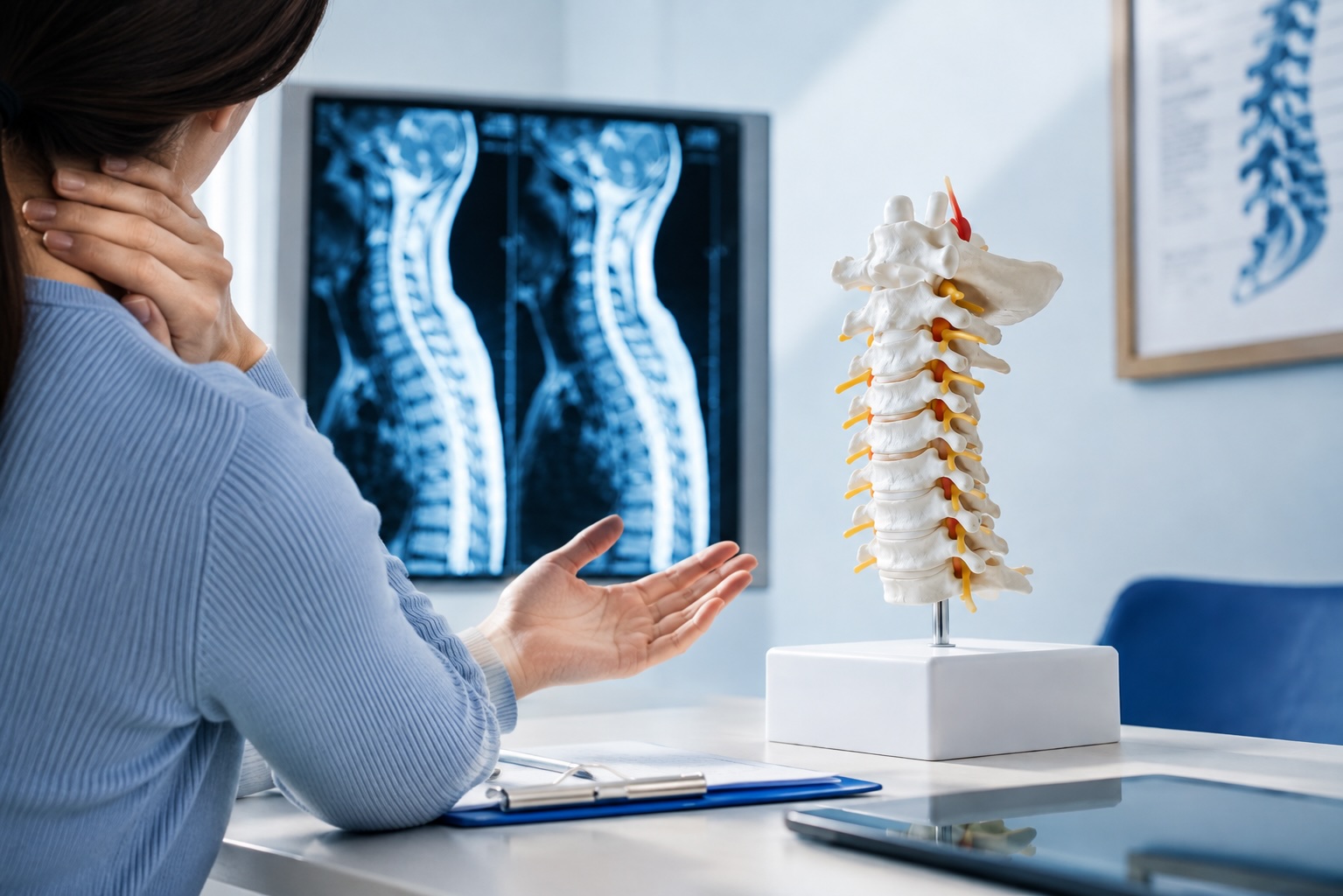
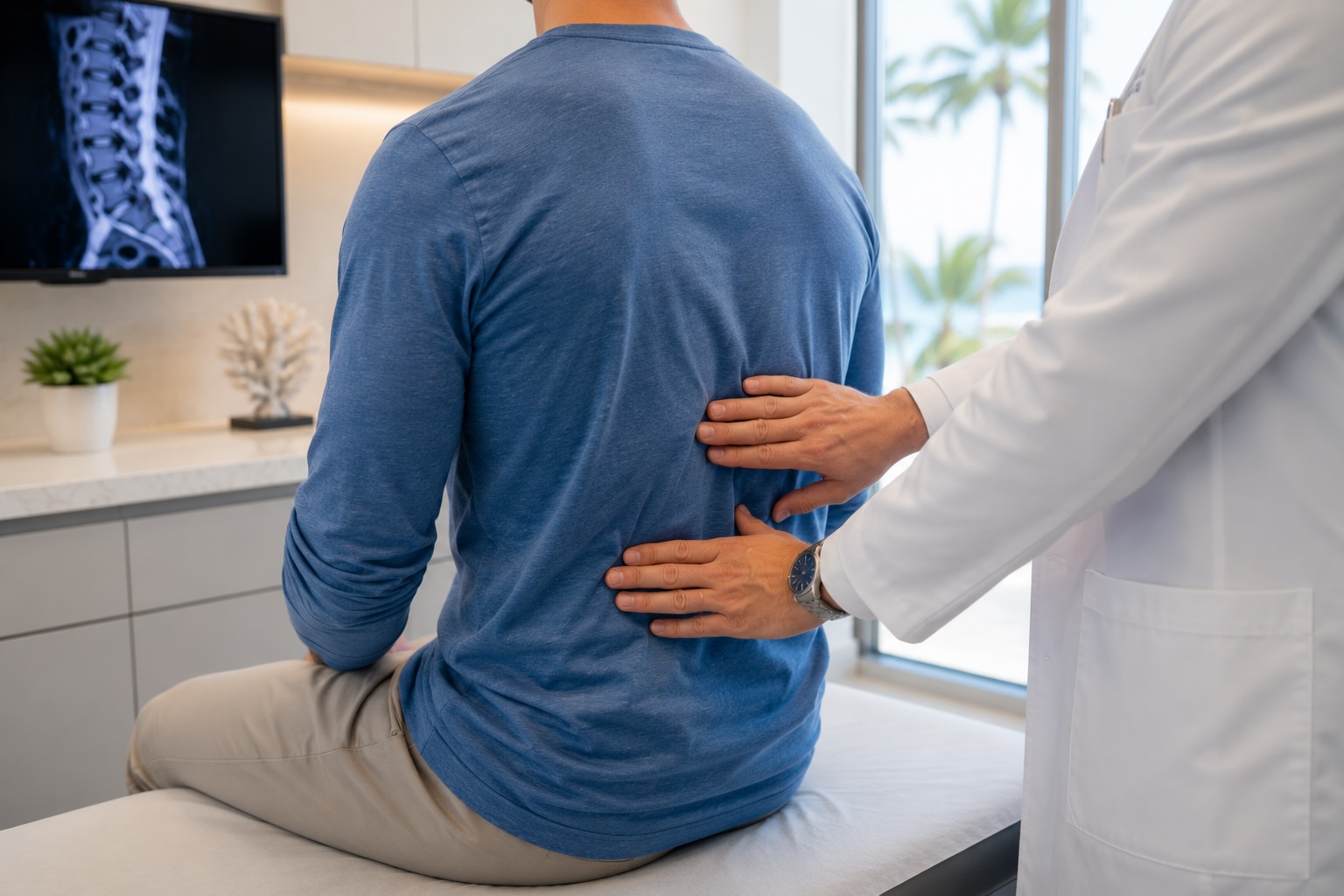
Diagnosis starts with a review of your symptoms and a physical exam to assess strength, reflexes, sensation, and movements that may reproduce the pain.
When needed, an MRI can help identify a herniated disc, spinal stenosis, or another source of nerve compression. The key is making sure the imaging findings match the patient’s actual symptoms.
Treatment Options for Lumbar Radiculopathy
Many patients improve without surgery. Treatment depends on what is causing the nerve irritation and how severe the symptoms are.
- Activity modification: Avoiding movements that aggravate the nerve can help reduce symptoms while the area heals.
- Exercise and physical therapy: Dr. Cuéllar may recommend specific exercises or refer patients to a physical therapist to improve strength, mobility, and spinal mechanics.
- Medication: Anti-inflammatory or pain-relieving medications may be recommended when appropriate.
- Epidural steroid injections: These can help reduce inflammation around an irritated spinal nerve and may make rehabilitation easier.
If symptoms persist, weakness progresses, or imaging shows significant nerve compression, a surgical evaluation may be appropriate.
When Is Surgery Considered for Lumbar Radiculopathy?
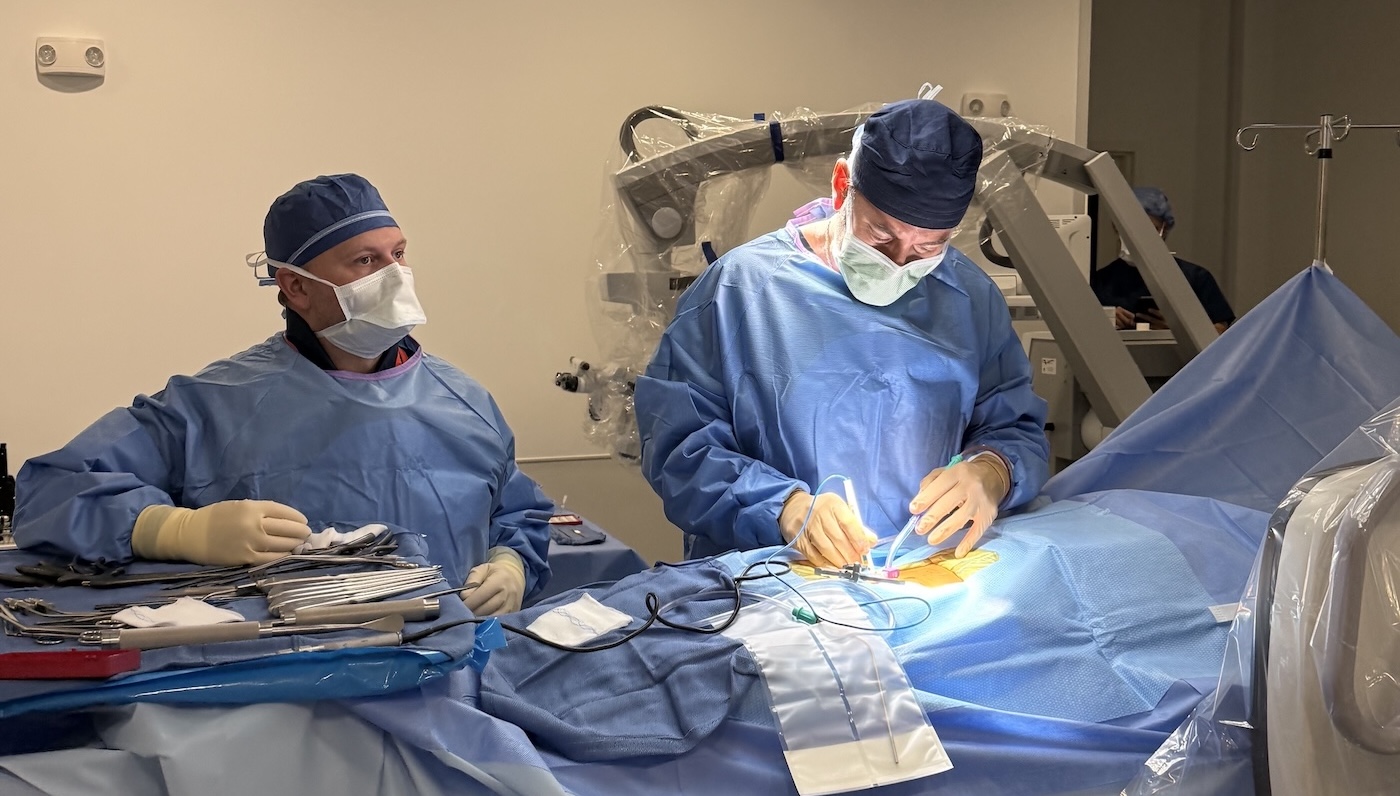
Surgery may be considered when symptoms do not improve with conservative care or when nerve compression is causing worsening weakness or loss of function.
Common reasons for surgical evaluation include:
- Persistent leg pain that limits daily activities
- Progressive numbness or weakness
- Significant nerve compression seen on imaging
- Symptoms that continue despite appropriate non-surgical treatment
The procedure depends on the cause. Options may include microdiscectomy, foraminotomy, or another decompression procedure. Fusion is typically reserved for cases where instability is also present.
When Lumbar Radiculopathy Needs Urgent Evaluation
Most cases of lumbar radiculopathy are not emergencies, but certain neurological symptoms should not be ignored.
Seek prompt medical evaluation for symptoms such as:
- Rapidly progressing leg weakness
- Significant new difficulty walking
- New loss of bowel or bladder control
- Numbness around the groin, inner thighs, or saddle area
These symptoms can indicate severe nerve compression that requires urgent assessment.
Schedule a Lumbar Radiculopathy Evaluation with Dr. Jason Cuéllar
Persistent leg pain, numbness, tingling, or weakness may be a sign of lumbar nerve compression and deserves a proper evaluation.
Dr. Jason M. Cuéllar is a board-certified orthopaedic spine surgeon experienced in both non-surgical treatment and advanced minimally invasive spine surgery.
Cuéllar Spine welcomes patients from Florida and across the country. Schedule a consultation to identify the cause of your symptoms and discuss the right treatment options for you.

 Skip to the content